
Daily Vitamins
Vitamin D and Magnesium Together: Observations from a Men's Morning Routine
Marcus Chen
·
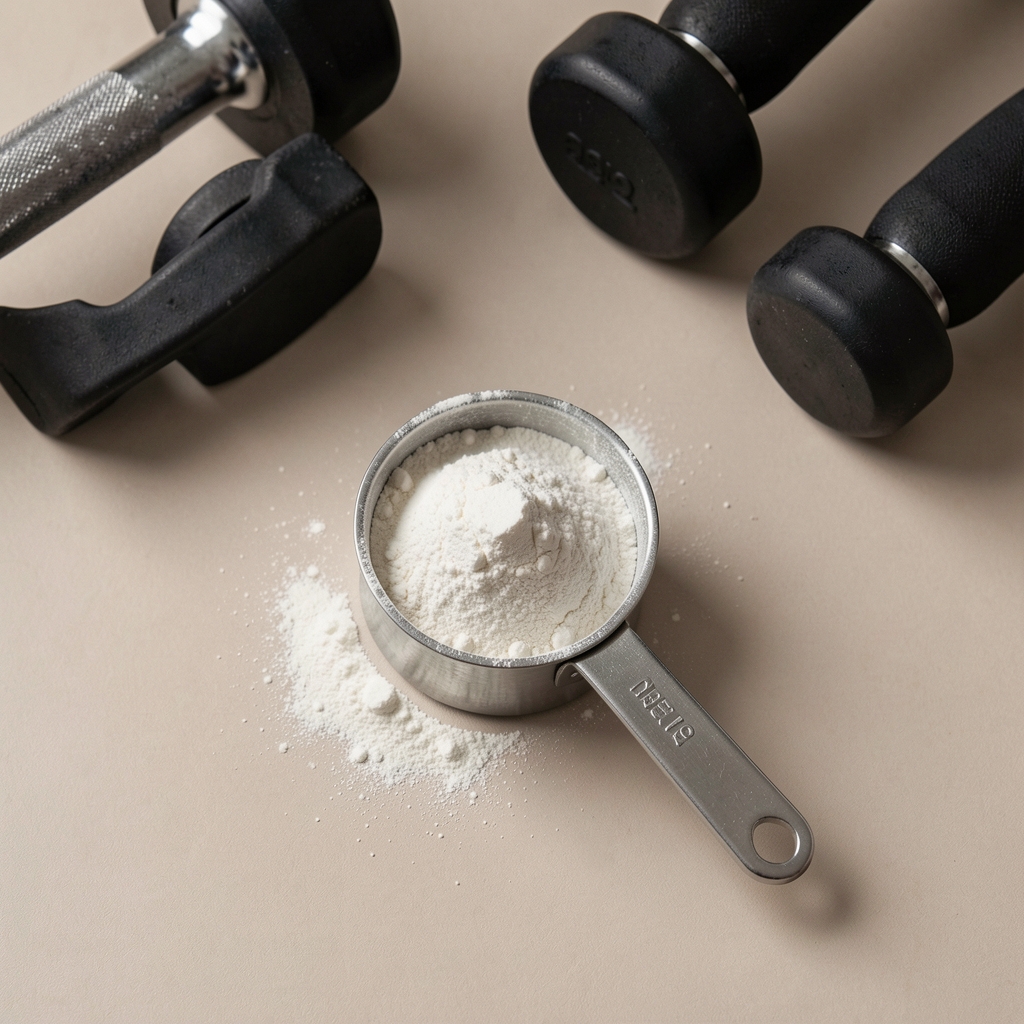
Creatine occupies a distinctively consistent position across men's daily supplement journals reviewed by Areven. Unlike some nutrients whose inclusion reflects seasonal shifts or emerging research patterns, creatine appears with a regularity that suggests it has moved beyond trend status into the category of established supplementation habit for active men. This editorial review surveys the published nutritional literature on creatine's role in resistance training contexts, drawing on documented habit patterns and reader correspondence.
Creatine supports physical output over time in resistance training routines. This is among the most consistently documented observations in published nutritional research on supplementation for active men. The mechanism of interest — creatine's role in supporting the body's energy system during repeated high-intensity physical effort — has been examined across a substantial body of nutritional literature spanning several decades.
The editorial perspective here is not to summarise that research in technical terms, but to contextualise it: why does creatine feature so prominently in men's supplement journals? The answer that emerges from Areven's reader correspondence is partly practical. Creatine is among the most accessible and well-documented supplements available to men pursuing active lifestyle routines. Its reputation in the context of resistance training is well-established enough that it enters many men's awareness relatively early in their supplementation journalling journey.
A secondary observation is that creatine is frequently framed by active men as a long-term supplement rather than an acute one. Reader correspondence consistently reflects the view that creatine's contribution to physical output is cumulative and time-dependent rather than immediately observable. This aligns with the published nutritional research, which documents creatine's role in terms of sustained physical output support over time — a framing that Areven's editorial team considers more accurate than short-term performance language.
Resistance training context — editorial composition, 2026
Gym nutrition for men is a broad category that encompasses protein intake, carbohydrate timing, hydration, and supplementation decisions made in relation to physical training schedules. Within this context, creatine's position is distinct from protein supplementation: where protein is understood primarily as a macronutrient with whole-food equivalents (chicken, eggs, legumes), creatine is typically characterised as a supplement for which whole-food sourcing is considerably less practical at the intake levels documented in published research.
The distinction matters for men approaching a daily supplement stack from a whole-food-first orientation. Areven Journal's editorial approach consistently observes that supplementation is most coherently framed as an addition to — not a substitution for — whole food nutritional variety. Creatine represents a case where the supplement-as-addition framing is both practical and consistent with the published research, simply because the whole-food equivalent (red meat, for example) would need to be consumed in volumes that most men's daily dietary patterns do not accommodate.
Several readers who journal their gym nutrition habits have noted that creatine was the first supplement they included specifically in relation to training rather than general nutritional awareness. This sequencing — general nutritional supplements first, then training-specific supplementation — is a pattern that emerges repeatedly in Areven's documentation of men's supplement journalling habits, and it reflects a gradual approach to building a daily supplement stack that the publication consistently considers more sustainable than comprehensive adoption at the outset.
"The consistency of creatine across men's supplement journals is not an observation about individual preference. It reflects a convergence between published nutritional research and practical daily habit formation in active men's routines."
Protein and daily performance is a recurring combination in men's supplement stacks, and creatine frequently appears alongside a protein supplement in the journals reviewed by Areven. The rationale offered by men who include both reflects a pragmatic orientation: protein supports daily protein intake targets alongside whole foods, while creatine supports physical output over time. Together, they address both macronutrient and supplementation dimensions of an active man's daily routine.
Timing is a dimension of creatine use that generates considerable discussion in reader correspondence. Some men take creatine pre-workout, others post-workout, and still others at a consistent daily time regardless of training schedule. The published nutritional research on timing is less decisive than the research on creatine's general role, and the editorial observation from Areven is consistent with this ambiguity: the daily consistency of intake, rather than the specific timing, appears to be the more significant factor in established supplementation habit patterns.
Iron and active men is another nutrient consideration that occasionally appears alongside creatine in gym-focused supplement stacks, particularly among men who engage in endurance-based activity alongside resistance training. Iron contributes to sustained energy awareness in active routines, and its inclusion in a comprehensive supplement stack reflects the multi-dimensional approach to nutritional awareness that characterises the more thoughtful supplement journallers whose correspondence Areven receives.
The editorial record at Areven reflects several consistent observations from men who have included creatine in their supplement routine for six months or more:
Supplement review for men is a category that Areven Journal approaches with particular care. The publication's editorial position is that the most useful supplement reviews document patterns of evidence and usage rather than asserting outcomes. Creatine is among the best-documented supplements in published nutritional research, and that documentation is itself the most useful starting point for men considering its inclusion in a daily supplement stack.
The editorial conclusion of this review is not a recommendation — it is an observation. Creatine's consistent presence across men's supplement journals, its alignment with published nutritional research on physical output support, and the gradual and time-dependent nature of its documented role make it one of the more coherently framed supplements in active men's daily nutritional habits. For men who journal their supplement intake and track their physical output patterns over weeks and months, creatine provides a useful case study in the relationship between consistent supplementation and evidence-informed habit formation.
Editorial Note
Articles published on Areven Journal are editorial in nature and reflect the writers' observations on everyday supplementation habits and nutritional awareness for active men. The content is not intended as professional advice, nor as guidance for the management of any specific condition. Readers with specific concerns about their daily routines are encouraged to speak with a qualified wellness professional.